
Dr Yogesh Khandave
About Me
Dr Yogesh Khandave
MBBS
Ophthalmologist
22 Years Experience
Biography
My Clinic
OPD Hours
| Monday | Morning | 09:00 AM | ||
| Evening | 09:00 PM | |||
| Tuesday | Morning | 09:00 AM | ||
| Evening | 09:00 PM | |||
| Wednesday | Morning | 09:00 AM | ||
| Evening | 09:00 PM | |||
| Thursday | Morning | 09:00 AM | ||
| Evening | 09:00 PM | |||
| Friday | Morning | 09:00 AM | ||
| Evening | 09:00 PM |
Treatments
Specialised care and treatments offered
PTERYGIUM SURGERY
Pterygium is characterized by a growth of fleshy tissue on the conjunctiva that can extend onto the cornea. Often referred to as 'surfer's eye,' it commonly arises from UV exposure but also due to environmental factors like dust irritation.
- Symptoms: People may experience redness in the eye, irritation sensations like itching or burning sensation.
- Diagnosis: A healthcare professional will usually diagnose pterygium during a routine eye examination by evaluating its appearance.
- Surgical Intervention: In symptomatic cases where pterygium interferes with vision or causes discomfort, surgical removal becomes necessary.
- Post-Operative Outlook: Most patients recover quickly; however regular follow-up visits are recommended to monitor healing rates.
Early removal presents advantages especially if it's causing distress— schedule an appointment if you suspect having developed this condition!
KERATOCONUS MANAGEMENT

Keratoconus is a progressive condition where the cornea thins and bulges into a cone shape. This distortion leads to significant visual impairments that require intervention as they progress over time.
- Symptoms: Signs may include increasing nearsightedness or astigmatism and notable changes in visual clarity.
- Diagnosis: An eye care professional will conduct corneal topography exams for accurate diagnosis alongside routine eye assessments.
- Treatment Options: Management varies from glasses for mild cases to rigid gas-permeable contact lenses or cross-linking procedures for advanced cases.
- Long-term Care: Regular follow-up appointments are essential for monitoring corneal shape changes over time.
Early diagnosis leads to better management options. Consult an expert if experiencing any symptoms associated with keratoconus.
AGE-RELATED MACULAR DEGENERATION (AMD) THERAPY

A significant cause of vision loss in older adults is age-related macular degeneration (AMD). It affects central vision critical for tasks such as reading and recognizing faces.
- Symptoms: Symptoms include blurred spots in the center of your field of vision or difficulties adapting to low light conditions.
- Diagnosis: AMD is diagnosed through comprehensive ocular examinations which may involve optical coherence tomography (OCT).
- Treatment Approaches: While there’s no cure for AMD, options like anti-VEGF injections and photodynamic therapy can help manage symptoms effectively.
- Lifestyle Considerations: Maintaining a healthy lifestyle with diet rich in antioxidants can support retinal health and slow progression.
If experiencing any visual disturbances related to AMD, prompt consultation with an ophthalmologist is imperative for appropriate care strategies.
DIABETIC RETINOPATHY TREATMENT

This serious eye condition occurs as a complication of diabetes and affects the blood vessels in the retina. Diabetic retinopathy can lead to severe vision impairment if not managed properly.
- Symptoms: Early stages might show no symptoms; however, blurred vision and floaters can develop as the condition worsens.
- Diagnosis: A dilated eye exam can identify changes in retinal blood vessels indicative of diabetic retinopathy.
- Treatment Options: Treatment may involve controlling blood sugar levels, laser treatments to reduce swelling or leakage from blood vessels, or surgery for advanced cases.
- Lifestyle Changes: Managing diabetes through diet and exercise plays a vital role in slowing disease progression.
If you have diabetes, regular eye check-ups are essential for early detection of this condition.
GLAUCOMA MANAGEMENT
Glaucoma is a group of eye diseases that can damage the optic nerve, often associated with increased intraocular pressure. Early detection and management are crucial to prevent vision loss.
- Symptoms: Initial symptoms may be absent. As the disease progresses, patients might notice peripheral vision loss or 'tunnel vision.'
- Diagnosis: Regular eye exams including tonometry to measure eye pressure and visual field tests are key in diagnosing glaucoma.
- Treatment Options: Management may include prescription eye drops, oral medications, laser treatment, or surgery depending on severity.
- Follow-Up: Continuous monitoring is necessary even after treatment to ensure intraocular pressure remains stable.
If diagnosed early, glaucoma can be managed effectively to preserve remaining vision.
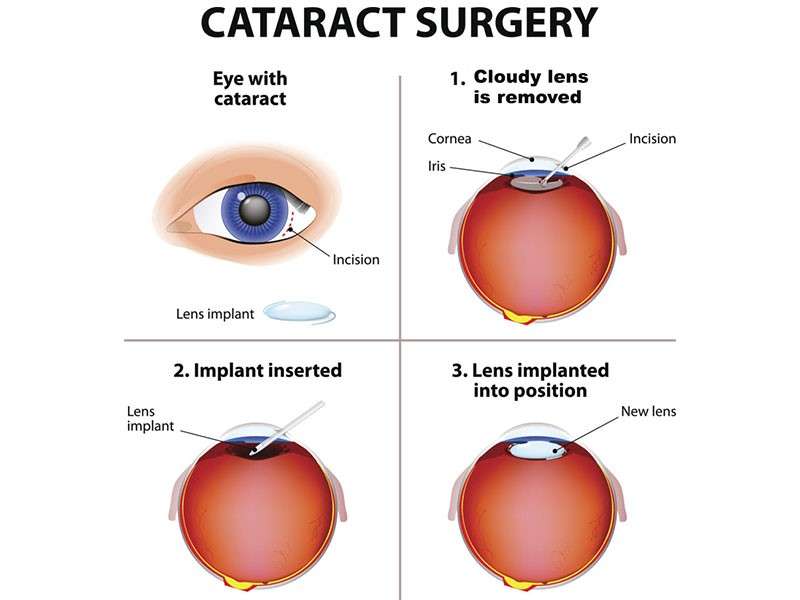
CATARACT SURGERY
Cataracts are a common eye condition where the lens of the eye becomes cloudy, leading to blurred vision. This condition often develops slowly and can significantly impact daily activities if left untreated.
- Symptoms: Common indicators include blurred or dim vision, difficulty seeing at night, and sensitivity to light.
- Diagnosis: A comprehensive eye examination is performed, including visual acuity tests and a careful evaluation of the lens.
- Treatment: Cataract surgery involves removing the cloudy lens and replacing it with an artificial intraocular lens (IOL). This procedure generally has a high success rate.
- What to Expect: Post-surgery recovery is rapid for most patients, with improvements in vision typically noticeable within days.
If you suspect cataracts may be affecting your vision, it is essential to consult an eye care professional promptly.