
Dr Vishal Gupta Eye Care Centre
About Me
Dr Vishal Gupta Eye Care Centre
MS
Ophthalmologist
10 Years Experience
Biography
My Clinic
OPD Hours
| Monday | Morning | 10:00 AM | - | 02:00 PM |
| Evening | 06:00 PM | - | 09:00 PM | |
| Tuesday | Morning | 10:00 AM | - | 02:00 PM |
| Evening | 06:00 PM | - | 09:00 PM | |
| Wednesday | Morning | 10:00 AM | - | 02:00 PM |
| Evening | 06:00 PM | - | 09:00 PM | |
| Thursday | Morning | 10:00 AM | - | 02:00 PM |
| Evening | 06:00 PM | - | 09:00 PM | |
| Friday | Morning | 10:00 AM | - | 02:00 PM |
| Evening | 06:00 PM | - | 09:00 PM | |
| Saturday | Morning | 10:00 AM | - | 02:00 PM |
| Evening | 06:00 PM | - | 09:00 PM | |
| Sunday | Morning | 10:00 AM | - | 02:00 PM |
| Evening | 06:00 PM | - | 09:00 PM |
Treatments
Specialised care and treatments offered
KERATOCONUS MANAGEMENT
Keratoconus involves progressive thinning of the cornea leading to distorted vision. Early detection allows for effective management strategies tailored towards individual needs ensuring preservation of sight quality over time!
- Main symptoms, including increased sensitivity light blurriness noticeably worsen gradually affecting day-to-day activities long-term if not addressed appropriately;
- A comprehensive examination observes corneal shape using advanced topographic techniques plus other assessments determining stage severity;
- Treatment ranges from custom contact lenses designed support ill-fitting surfaces up through collagen cross-linking therapy promoting stability within weakened tissues over time;
With ongoing monitoring alongside professional guidance adapting lifestyle habits accordingly you can maintain optimal visual outcomes indefinitely despite this complex condition!
PTERYGIUM REMOVAL

Pterygium is a growth of fleshy tissue on the conjunctiva that can extend onto the cornea. While benign, it may cause discomfort and visual impairment if left untreated. Surgical removal becomes necessary when it affects daily activities or worsens over time.
- If you experience significant symptoms, such as irritation or changes in eyesight due to its presence on your eye surface this growth should be evaluated promptly!
- Dilated fundus examinations are key for accurate diagnosis alongside patient-reported history regarding symptoms experienced over time;
- Surgical removal techniques employ excision combined with autograft placement from healthy conjunctivae nearby reducing recurrence rates significantly post-operation!
This outpatient procedure offers swift recovery times allowing most patients return home quickly with improved comfort shortly after treatment concludes!
RETINA REPAIR SURGERY

Retina repair surgery encompasses various techniques aimed at fixing retinal detachments or tears. These conditions require prompt attention as they can lead to permanent vision loss if left untreated.
- Affected individuals might experience sudden flashes of light or floaters—key symptoms indicating possible retinal issues.
- The diagnosis usually involves dilated eye examinations complemented by imaging tests such as optical coherence tomography (OCT).
- Treatment methods may vary from laser photocoagulation to vitrectomy or scleral buckle procedures based on the type of detachment present.
Surgery aims not only to reattach the retina but also restore as much functional sight as possible while minimizing complications throughout recovery periods!
GLAUCOMA TREATMENT

Glaucoma refers to a group of eye conditions that lead to damage of the optic nerve, often due to increased intraocular pressure. It's crucial for early detection and management to prevent irreversible vision loss.
- Common symptoms include peripheral vision loss, blurred vision, or halos around lights; however, many types have no noticeable symptoms until significant damage occurs.
- A comprehensive eye exam helps diagnose glaucoma through tests that measure intraocular pressure and evaluate optic nerve health.
- Treatment options can include prescription eye drops, oral medications, laser surgery, or more invasive surgical procedures depending on severity.
If managed effectively with regular check-ups and adherence to treatment regimens, individuals can preserve their sight for many years despite this chronic condition.
LASIK EYE SURGERY
LASIK (Laser-Assisted In Situ Keratomileusis) is a popular surgical procedure designed to correct refractive vision errors such as nearsightedness, farsightedness, and astigmatism. By reshaping the cornea, LASIK can offer a permanent solution for clearer vision.
- This intervention addresses common symptoms like persistent blurred vision and reliance on corrective lenses.
- A thorough evaluation includes mapping the cornea's surface and checking overall eye health before proceeding.
- Treatment involves creating a thin flap in the cornea and using a laser to reshape the underlying tissue.
- Most patients notice improvements almost immediately after surgery!
The recovery process is typically quick. Many individuals enjoy uncorrected vision almost immediately following the procedure!
CATARACT SURGERY
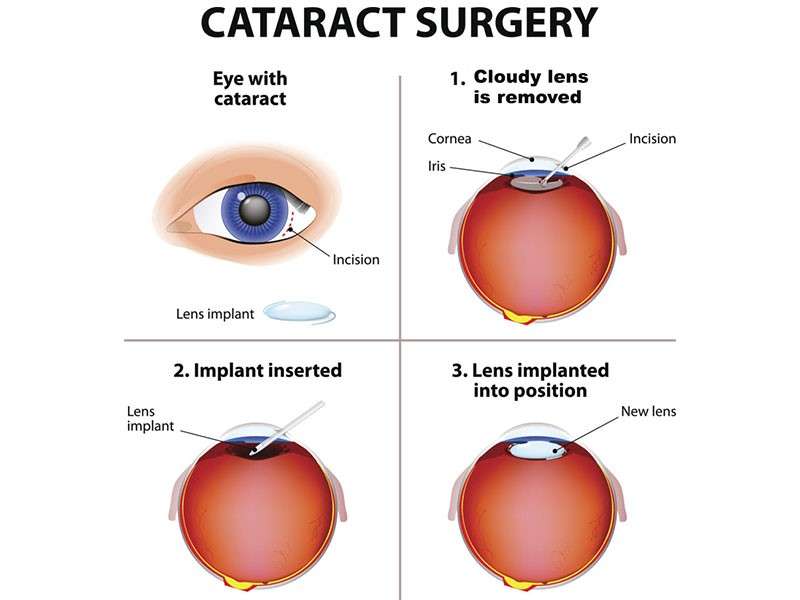
Cataract surgery is a common procedure aimed at restoring vision affected by cataracts, which are cloudy areas in the lens of the eye. This condition often develops gradually, leading to blurred vision and difficulty seeing at night.
- Symptoms may include cloudy or blurry vision, difficulty with night vision, and seeing halos around lights.
- The diagnosis typically involves a comprehensive eye exam, including visual acuity tests and slit-lamp examination.
- Management options usually include phacoemulsification surgery, where the cloudy lens is broken up using ultrasound and replaced with an artificial lens.
- Post-operative care is essential for recovery, involving follow-up visits to monitor healing and ensure optimal vision restoration.
After cataract surgery, most patients experience significant improvements in their vision, allowing them to return to daily activities without restrictions.