
Dr Saurabh Singh
About Me
Dr Saurabh Singh
MS
Ophthalmologist
10 Years Experience
Biography
My Clinic
OPD Hours
| Monday | Morning | 10:00 AM | - | 02:00 PM |
| Evening | 06:00 PM | - | 09:00 PM | |
| Tuesday | Morning | 10:00 AM | - | 02:00 PM |
| Evening | 06:00 PM | - | 09:00 PM | |
| Wednesday | Morning | 10:00 AM | - | 02:00 PM |
| Evening | 06:00 PM | - | 09:00 PM | |
| Thursday | Morning | 10:00 AM | - | 02:00 PM |
| Evening | 06:00 PM | - | 09:00 PM | |
| Friday | Morning | 10:00 AM | - | 02:00 PM |
| Evening | 06:00 PM | - | 09:00 PM | |
| Saturday | Morning | 10:00 AM | - | 02:00 PM |
| Evening | 06:00 PM | - | 09:00 PM | |
| Sunday | Morning | 10:00 AM | - | 02:00 PM |
| Evening | 06:00 PM | - | 09:00 PM |
Treatments
Specialised care and treatments offered
PEDIATRIC EYE CARE
Pediatric eye care focuses on managing children’s ocular health from infancy through adolescence. Early detection of issues leads to better long-term outcomes for little ones facing visual challenges.
- Symptoms : Children may show signs like squinting excessively or having difficulty focusing on objects; these behaviors shouldn't be overlooked.
- Diagnosis : Comprehensive pediatric eye exams involve assessing visual acuity and alignment through specialized testing suited for younger patients.
- Treatment options : Depending on findings corrective lenses might be prescribed; certain developmental delays may require ongoing monitoring alongside possible interventions.
Proactive engagement regarding children's eyesight fosters healthy development while minimizing future complications effectively during formative years!
COMPREHENSIVE EYE EXAM

A comprehensive eye exam assesses overall ocular health and identifies potential issues before they develop into serious problems. Routine exams are imperative for maintaining optimal sight throughout life.
- Symptoms indicating need for an exam: Blurring, discomfort, or frequent headaches could signal underlying problems requiring attention.
- Diagnosis process : The examination includes visual acuity tests, retinal assessments using specialized equipment like fundus cameras, and intraocular pressure checks among other evaluations.
- Treatment options : Based on findings: corrective lenses might be prescribed; referrals could also be made for more specific interventions if needed.
Regular examinations aid in detecting early signs of conditions such as glaucoma or diabetic retinopathy thus ensuring timely treatment.
MACULAR DEGENERATION EVALUATION

This age-related condition primarily affects central vision due to deterioration in the macula. Understanding its impact can empower individuals toward early intervention strategies.
- Symptoms: Difficulty reading, recognizing faces, or seeing fine details are common early signs.
- Diagnosis: Visual acuity tests complemented by optical coherence tomography help evaluate the extent of degeneration.
- Treatment options: While there’s no cure, therapies such as anti-VEGF injections can slow progression in wet macular degeneration cases.
The importance of monitoring changes in your vision cannot be overstated; prompt evaluations can make all the difference in outcomes with macular degeneration.
GLAUCOMA TESTING

Glaucoma refers to a group of eye conditions leading to optic nerve damage, often associated with increased intraocular pressure. Early detection plays a key role in management.
- Symptoms: Many do not experience symptoms until advanced stages; peripheral loss of vision may occur first.
- Diagnosis: Comprehensive testing includes measuring intraocular pressure and examining the optic nerve head for signs of damage.
- Treatment options: Medications, laser therapy, or surgery might be recommended depending on severity and progression of the disease.
A proactive approach with regular assessments is essential for preserving vision when it comes to glaucoma management.
DIABETIC RETINOPATHY SCREENING
Diabetic retinopathy is a complication that arises due to diabetes and can lead to severe vision impairment if not detected early. Regular screenings are crucial for preventing irreversible damage.
- Symptoms: Often asymptomatic in early stages, blurred vision and dark spots may appear as it progresses.
- Diagnosis: A dilated eye exam enables an eye care professional to assess retinal health effectively.
- Treatment options: Management includes controlling blood sugar levels and may necessitate laser treatments or injections in advanced cases.
- Importance of screening: Early detection through routine screenings can significantly reduce the risk of blindness related to this condition.
Scheduling regular check-ups is vital for individuals with diabetes to protect their eyesight proactively.
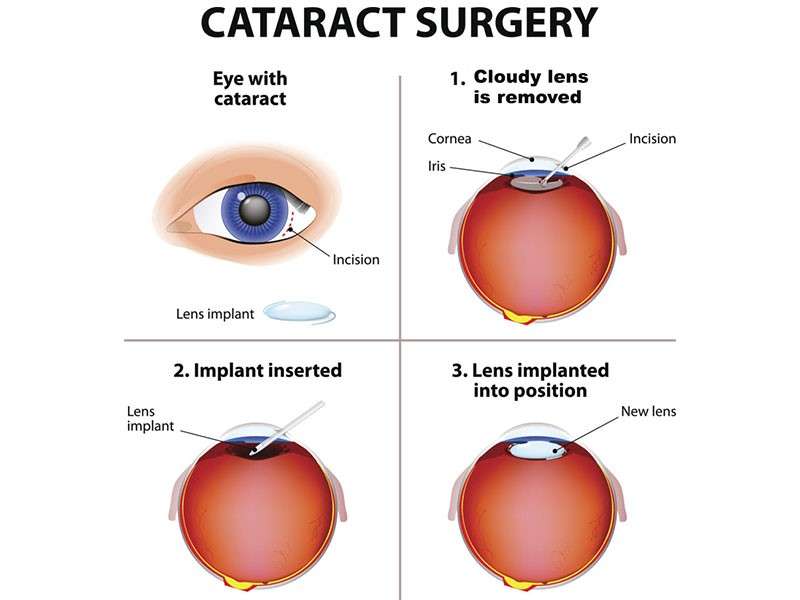
CATARACT SURGERY
Cataracts are a common eye condition characterized by the clouding of the lens in the eye, leading to diminished vision. This gradual change can hinder daily activities as light becomes obstructed.
- Symptoms: Blurred or cloudy vision, difficulty with night vision, and halos around lights.
- Diagnosis: An ophthalmologist performs a comprehensive eye exam, including visual acuity tests and examination of the lens using a slit lamp.
- Treatment options: The primary treatment is cataract surgery, where the cloudy lens is replaced with an artificial intraocular lens.
- Management: Regular eye exams post-surgery are essential to monitor healing and visual improvement.
- Expectations: Most patients experience significant improvement in vision shortly after surgery, allowing them to return to normal activities quickly.
Timely intervention through surgery can dramatically improve quality of life for those impacted by cataracts.