
Dr Ritesh Bansal
About Me
Dr Ritesh Bansal
MBBS
Neurologist
10 Years Experience
Biography
My Clinic
OPD Hours
| Monday | Morning | 10:00 AM | - | 02:00 PM |
| Evening | 06:00 PM | - | 09:00 PM | |
| Tuesday | Morning | 10:00 AM | - | 02:00 PM |
| Evening | 06:00 PM | - | 09:00 PM | |
| Wednesday | Morning | 10:00 AM | - | 02:00 PM |
| Evening | 06:00 PM | - | 09:00 PM | |
| Thursday | Morning | 10:00 AM | - | 02:00 PM |
| Evening | 06:00 PM | - | 09:00 PM | |
| Friday | Morning | 10:00 AM | - | 02:00 PM |
| Evening | 06:00 PM | - | 09:00 PM | |
| Saturday | Morning | 10:00 AM | - | 02:00 PM |
| Evening | 06:00 PM | - | 09:00 PM | |
| Sunday | Morning | 10:00 AM | - | 02:00 PM |
| Evening | 06:00 PM | - | 09:00 PM |
Treatments
Specialised care and treatments offered
INTRATHECAL BACLOFEN THERAPY
This treatment involves delivering baclofen directly into the spinal fluid via an implanted pump system to manage severe spasticity not responsive adequately through oral medications. It provides targeted muscle relaxation with fewer systemic effects.
- The Condition & Symptoms Addressed: Spasticity from multiple sclerosis, spinal cord injury, or cerebral palsy causes muscle stiffness limiting mobility and comfort. Assessment & Diagnosis Pathways: Neurological evaluations including tone scales establish candidates who benefit from intrathecal delivery over systemic treatment attempts.
MICROVASCULAR DECOMPRESSION
This operation targets cranial nerve compression syndromes such as trigeminal neuralgia by relieving pressure on nerves caused by vascular contact. It helps alleviate severe facial pain resistant to medications.
- Causative Factors & Symptoms: Pulsating blood vessels compress nerves resulting in sharp stabbing facial pain attacks triggered by daily activities.
- Evolving Diagnostics: High-resolution MRI confirms neurovascular conflict along the affected nerve pathway prior to surgery planning.
- Surgical Technique Details:The surgeon exposes the nerve root via a small skull opening and inserts cushioning material between the vessel and nerve surface.
- Pain Relief & Recovery Expectations:The majority experience immediate pain improvement; minimal side effects include mild numbness or hearing changes in rare cases.
This approach offers durable relief without destroying nerve tissue compared to other destructive procedures used previously for trigeminal neuralgia treatment challenges.
CAROTID ENDARTERECTOMY
A carotid endarterectomy is a surgical technique designed to prevent strokes by removing plaque buildup from carotid arteries supplying blood to the brain. It reduces stroke risk caused by arterial narrowing.
- Underlying Issue: Atherosclerosis leads to narrowed carotid arteries, causing transient ischemic attacks or strokes.
- Diagnosis Methods: Ultrasound imaging and angiography assess blood flow obstruction severity before surgery recommendation.
- Surgical Procedure: The surgeon makes an incision in the neck, opens the artery, removes plaque deposits, then repairs the artery wall.
- Treatment Outcome: Patients typically see improved cerebral circulation and decreased stroke recurrence risk post-procedure.
This intervention is crucial for individuals with symptomatic carotid stenosis aiming to restore normal blood flow and protect brain health effectively.
EPILEPSY SURGERY
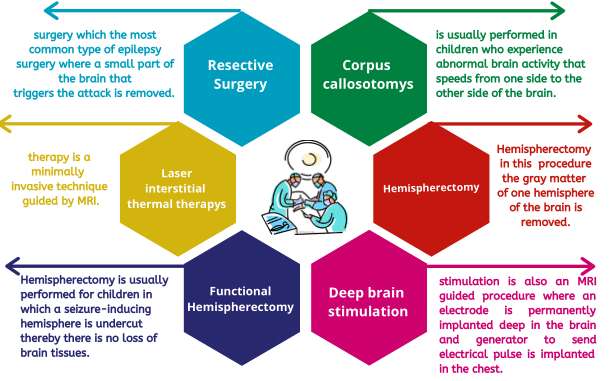
Surgery for epilepsy aims to remove or isolate brain regions causing seizures when medications fail to provide adequate control. This can drastically reduce seizure frequency or eliminate them entirely.
- Symptoms and Causes: Frequent unprovoked seizures arise from localized brain abnormalities like tumors or scar tissue.
- Diagnostic Workup: Extensive EEG monitoring, MRI scans, and sometimes invasive electrode placement help locate seizure foci precisely.
- The Surgical Approach: Depending on findings, options include resection of affected cortex or disconnection procedures like corpus callosotomy.
- Treatment Expectations: Surgery can significantly improve seizure control but also carries risks like neurological deficits which are carefully discussed beforehand.
This therapy is considered when long-term seizure freedom cannot be achieved with drugs alone, offering many patients restored independence and safety.
DEEP BRAIN STIMULATION (DBS)
Deep Brain Stimulation (DBS) is a surgical procedure primarily used to treat movement disorders such as Parkinson's disease, essential tremor, and dystonia. It involves implanting electrodes in specific areas of the brain to regulate abnormal impulses.
- Causes and Symptoms: DBS targets neurological disorders characterized by tremors, rigidity, and involuntary movements.
- Diagnosis: Candidates undergo detailed neurological evaluations and imaging to identify suitable brain regions for electrode placement.
- Treatment Process: The surgery involves placing electrodes connected to a pulse generator implanted under the skin in the chest.
- Management: Post-surgical programming adjusts stimulation levels for optimal symptom control with minimal side effects.
- Outcomes: Patients often experience significant improvements in motor function and quality of life but require ongoing follow-up for device management.
This procedure offers hope for patients with debilitating movement symptoms unresponsive to medication, providing a customizable approach to symptom control.