
Dr Preet Agarwal
About Me
Dr Preet Agarwal
MS
Ophthalmologist
10 Years Experience
Biography
My Clinic
OPD Hours
| Monday | Morning | 10:00 AM | - | 02:00 PM |
| Evening | 06:00 PM | - | 09:00 PM | |
| Tuesday | Morning | 10:00 AM | - | 02:00 PM |
| Evening | 06:00 PM | - | 09:00 PM | |
| Wednesday | Morning | 10:00 AM | - | 02:00 PM |
| Evening | 06:00 PM | - | 09:00 PM | |
| Thursday | Morning | 10:00 AM | - | 02:00 PM |
| Evening | 06:00 PM | - | 09:00 PM | |
| Friday | Morning | 10:00 AM | - | 02:00 PM |
| Evening | 06:00 PM | - | 09:00 PM | |
| Saturday | Morning | 10:00 AM | - | 02:00 PM |
| Evening | 06:00 PM | - | 09:00 PM | |
| Sunday | Morning | 10:00 AM | - | 02:00 PM |
| Evening | 06:00 PM | - | 09:00 PM |
Treatments
Specialised care and treatments offered
DRY EYE SYNDROME MANAGEMENT
This common condition arises when tears fail to provide adequate lubrication for eyes, leading to discomfort. Recognizing dry eyes is pivotal for maintaining good ocular health
- Symptoms : Persistent dryness sensations alongside irritation; you might also face watery eyes compensating for lack thereof
- Diagnosis: Assessments such as Schirmer's test measure tear production while examining tear film stability helps establish severity levels
- Treatment Options : Various prescriptions ranging from artificial tears overlasting solutions contemplate addressing underlying causes
- Management Practices : Environmental adjustments like humidifiers alongside rigorous eyelid hygiene fortify relief experience while benefiting overall comfort considerably
Taking proactive steps towards managing dry eyes empowers support especially since many individuals battle chronic symptoms
AGE-RELATED MACULAR DEGENERATION (AMD) TREATMENT

This progressive eye disease affects central vision due to macular damage commonly associated with aging. Managing AMD can help maintain independence for longer periods among older adults.
- Symptoms: Distorted or blurred central vision makes tasks like reading challenging; straight lines may appear wavy or bent.
- Diagnosis: Optical coherence tomography (OCT) allows for detailed imaging of the retina confirming signs associated with AMD development.
RETINAL DETACHMENT REPAIR

A retinal detachment is a serious condition necessitating immediate medical attention. It occurs when the retina separates from its underlying supportive tissue, leading to potential blindness if not addressed quickly.
- Symptoms: Sudden appearance of floaters, flashes of light, or a shadow over your field of vision are warning signs.
- Diagnosis: An ophthalmologist will conduct thorough examinations including dilated fundus examination and ultrasound if needed to confirm detachment status.
- Treatment options: Surgical procedures such as pneumatic retinopexy or vitrectomy are common corrective measures performed on detached retinas.
The urgency of treatment greatly increases chances for successful outcomes in restoring vision after retinal detachment has occurred.
DIABETIC RETINOPATHY TREATMENT

This condition affects individuals with diabetes and can lead to vision loss if not treated promptly. It occurs when high blood sugar levels damage the tiny blood vessels in the retina.
- Symptoms: Blurred or fluctuating vision, dark spots in your vision, or sudden loss of vision.
- Diagnosis: A dilated eye exam allows for close inspection of the retina and identifying changes associated with diabetic retinopathy.
- Treatment options: Laser therapy can help manage bleeding and prevent further sight deterioration; anti-VEGF injections may also be used.
- Lifestyle management: Controlling blood sugar levels is critical in slowing disease progression.
Timely intervention can safeguard sight and improve overall ocular health among those living with diabetes.
GLAUCOMA MANAGEMENT
Glaucoma is a group of eye conditions that damage the optic nerve, often due to increased pressure in the eyes. Early detection is crucial for preserving vision.
- Symptoms: Often asymptomatic initially; however, tunnel vision may develop as it progresses.
- Diagnosis: Comprehensive eye exams including tonometry to measure intraocular pressure and visual field tests are essential.
- Treatment options: Medications (eye drops) to lower intraocular pressure are typically used; in some cases, surgical intervention may be warranted.
- Management strategies: Regular check-ups help monitor eye health and adjust treatments as needed.
The goal of glaucoma management is to slow the progression of this disease and guard against irreversible vision loss.
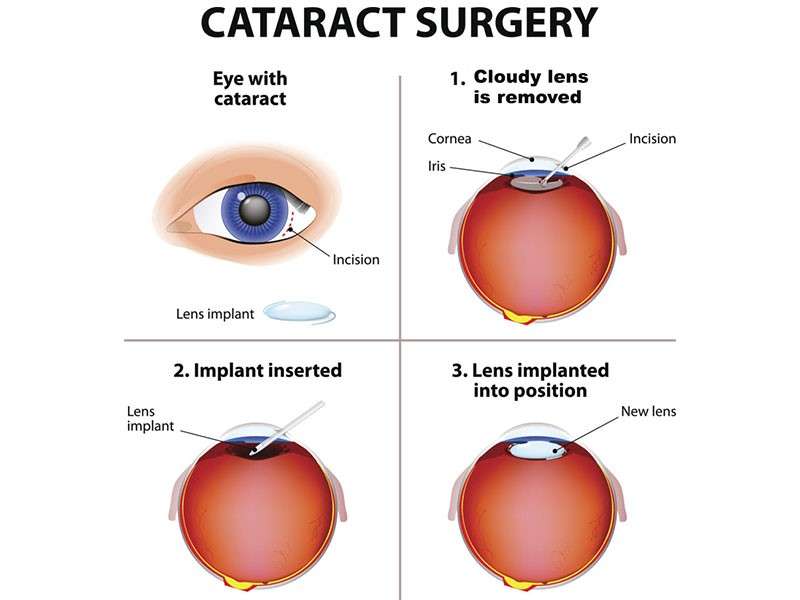
CATARACT SURGERY
Cataracts are a common eye condition that often occurs due to aging. When the lens of the eye becomes cloudy, vision can be impaired significantly.
- Symptoms: Blurred or dim vision, difficulty seeing at night, sensitivity to light, and double vision.
- Diagnosis: Eye examinations by an ophthalmologist can determine the presence of cataracts through visual acuity tests and slit-lamp examinations.
- Treatment options: Surgical removal of the cloudy lens is usually necessary; this involves replacing it with a clear artificial lens.
- Management: Post-surgery, many patients experience improved vision and a quicker recovery; follow-up visits are essential for monitoring progress.
Cataract surgery is one of the most common and effective procedures performed today, restoring quality of life for many individuals.