
Dr Neelam Agnihotri
About Me
Dr Neelam Agnihotri
MS
Ophthalmologist
10 Years Experience
Biography
My Clinic
OPD Hours
| Monday | Morning | 10:00 AM | - | 02:00 PM |
| Evening | 06:00 PM | - | 09:00 PM | |
| Tuesday | Morning | 10:00 AM | - | 02:00 PM |
| Evening | 06:00 PM | - | 09:00 PM | |
| Wednesday | Morning | 10:00 AM | - | 02:00 PM |
| Evening | 06:00 PM | - | 09:00 PM | |
| Thursday | Morning | 10:00 AM | - | 02:00 PM |
| Evening | 06:00 PM | - | 09:00 PM | |
| Friday | Morning | 10:00 AM | - | 02:00 PM |
| Evening | 06:00 PM | - | 09:00 PM | |
| Saturday | Morning | 10:00 AM | - | 02:00 PM |
| Evening | 06:00 PM | - | 09:00 PM | |
| Sunday | Morning | 10:00 AM | - | 02:00 PM |
| Evening | 06:00 PM | - | 09:00 PM |
Treatments
Specialised care and treatments offered
OCULOPLASTIC SURGERY CONSULTATION
An oculoplastic surgery consultation involves assessing conditions related to eyelids, lacrimal system (tear ducts), and orbit (eye socket). This subspecialty focuses on both aesthetic improvements and medical needs for patients facing various concerns associated with these areas.
- Symptoms can include drooping eyelids affecting vision, tear duct obstructions causing excessive tearing, or cosmetic issues requiring correction.
- Diagnostic assessments cover a physical exam combined with imaging studies if necessary to evaluate underlying structures before planning suitable interventions.
- Treatments offered range from minimally invasive procedures addressing cosmetic enhancements through surgeries that correct functional problems such as ptosis repair or drainage canaloplasty scheduled based on individual requirements.
A thorough consultation ensures expectations align with possible outcomes while prioritizing patient comfort throughout any chosen course of action moving forward as needed without compromising safety protocols established within clinical environments worldwide!
DRY EYE MANAGEMENT

Dry eye syndrome occurs when tears cannot adequately lubricate the eyes. This condition can cause discomfort and impact daily activities significantly if left untreated.
VISION THERAPY

Vision therapy consists of individualized programs designed to improve visual skills and enhance overall visual performance. It's particularly beneficial for individuals experiencing amblyopia or strabismus.
- The main symptoms addressed include difficulties with eye coordination or focusing on tasks like reading or sports activities.
- A thorough examination is conducted to evaluate visual acuity and motor control before developing a personalized program involving exercises and activities targeted at improving these skills.
- This therapeutic approach may involve using prisms, specialized lenses, or other tools during sessions to achieve optimal results over time.
This therapy has proven effective in helping children and adults overcome challenges associated with visual processing, thus enhancing quality of life dramatically through improved sight functions.
RETINAL IMAGING

Retinal imaging is an advanced diagnostic tool that provides detailed images of the retina for monitoring various eye conditions. This non-invasive technique helps in early detection and management strategies.
- The procedure can identify issues such as diabetic retinopathy or macular degeneration by capturing high-resolution images of the retinal layers.
- No special preparations are needed from patients; however, dilation drops may be administered for clearer views.
- Treatment options discovered through imaging may include medication or lifestyle changes tailored to specific conditions identified during examinations.
- This process contributes greatly to safeguarding vision by facilitating timely interventions when necessary.
Retinal imaging represents a significant leap forward in achieving accurate diagnoses without discomfort or extensive procedures for patients.
GLAUCOMA EVALUATION
Glaucoma is a progressive eye disease that can lead to irreversible blindness if not detected early. Regular evaluations are crucial for those at risk.
- Common symptoms are often not noticed until significant damage has occurred, making it essential for proactive screening.
- Diagnosis involves measuring intraocular pressure (IOP), assessing optic nerve health, and conducting visual field tests.
- Treatment options vary from medicated eye drops to surgical procedures aimed at reducing IOP and preserving vision.
- Patients should be aware that managing glaucoma requires ongoing assessments and possibly lifelong treatment plans.
Early detection through regular evaluations significantly enhances the chances of maintaining healthy eyesight despite this challenging condition.
CATARACT SURGERY
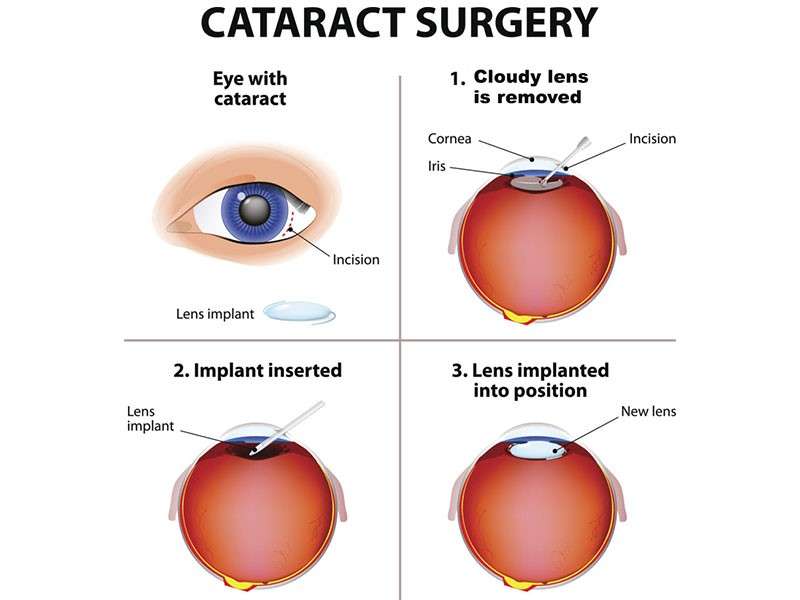
Cataract surgery is a common procedure aimed at restoring vision by removing the cloudy lens that forms due to cataracts. This condition often develops slowly, leading to gradual vision loss.
- Symptoms may include blurred vision, difficulty seeing at night, and sensitivity to light.
- Diagnosis typically involves a comprehensive eye exam, including vision tests and examination of the lens.
- Various methods of treatment exist, with phacoemulsification being the most common technique where an ultrasound is used to break up the cataract.
- Patients can expect improved clarity of vision post-surgery; however, some may still require glasses for optimal use.
Cataract surgery is generally safe and effective, allowing many to regain their independence in daily activities.