
DR N K Misra Eye Clinic
About Me
DR N K Misra Eye Clinic
MS
Ophthalmologist
10 Years Experience
Biography
My Clinic
OPD Hours
| Monday | Morning | 10:00 AM | - | 02:00 PM |
| Evening | 06:00 PM | - | 09:00 PM | |
| Tuesday | Morning | 10:00 AM | - | 02:00 PM |
| Evening | 06:00 PM | - | 09:00 PM | |
| Wednesday | Morning | 10:00 AM | - | 02:00 PM |
| Evening | 06:00 PM | - | 09:00 PM | |
| Thursday | Morning | 10:00 AM | - | 02:00 PM |
| Evening | 06:00 PM | - | 09:00 PM | |
| Friday | Morning | 10:00 AM | - | 02:00 PM |
| Evening | 06:00 PM | - | 09:00 PM | |
| Saturday | Morning | 10:00 AM | - | 02:00 PM |
| Evening | 06:00 PM | - | 09:00 PM | |
| Sunday | Morning | 10:00 AM | - | 02:00 PM |
| Evening | 06:00 PM | - | 09:00 PM |
Treatments
Specialised care and treatments offered
DIABETIC RETINOPATHY TREATMENT
This complication stemming from diabetes affects blood vessels in the retina leading potentially severe consequences such as blindness if untreated! Its onset often correlates directly with uncontrolled diabetes—so awareness cannot be overstressed!
- Early signs might just manifest unnoticeably until routine screening unveils them hiding beneath otherwise seemingly healthy conditions;
- A dilated fundus exam assesses any present abnormalities beyond typical checks providing clear pathways onward towards eventual management options tailored individual circumstances;
- Initial treatments might focus on controlling blood sugar levels while subsequently employing laser therapy alongside injections targeting vascular leaks when more severe stages surface surrounding situations warranting further action!
- Regular monitoring becomes essential throughout progressive stages discerning evolving needs reflected back into ongoing treatment decisions guiding maintenance protocols over time ensuring optimal outcomes achieved together toward sustained health long-term outlooks envisioned ahead.
Addressing diabetic retinopathy proactively translates into fostering better overall ocular health leaving brighter futures achievable!
RETINAL DETACHMENT REPAIR

Retinal detachment occurs when the retina separates from its underlying supportive tissue. This serious condition necessitates prompt medical intervention to avert permanent vision loss. Recognizing risk factors aids in prevention efforts among susceptible individuals!
- The main symptoms include sudden appearance of floaters or flashes of light and shadow over parts of your visual field — all requiring immediate attention!
- An ophthalmologist performs various tests like dilated fundus examination helps confirm diagnosis quickly amidst existing symptoms presented by patients seeking help immediately!
- Treatment usually encompasses surgical repair methods — whether via pneumatic retinopexy (injecting gas), scleral buckle placement (supportive band around eyeball) or vitrectomy (removing gel-like substance).
- Following surgery entails strict adherence to scheduled checkups ensuring retinal reattachment success & monitored outcomes during healing process!
With timely measures taken against retinal detachment threat poses lasting impacts from which recovery remains possible!
PTERYGIUM SURGERY

Pterygium is a growth of tissue on the conjunctiva that can extend onto the cornea. Often caused by prolonged sun exposure, it may lead to discomfort and vision issues as it progresses. Understanding this condition is key in deciding on its management strategy.
- Symptoms may encompass redness in the eye, irritation, and blurry vision if it encroaches upon central vision areas.
- A detailed observation during an eye exam confirms diagnosis based on appearance; additional imaging may be used if needed for larger growths.
- Surgical removal is recommended when pterygium obstructs vision or causes significant discomfort; techniques vary based on growth size and location.
- A robust aftercare plan ensures patients heal well post-surgery with decreased risk of recurrence through proper follow-up appointments.Pterygium surgery, while effective, requires patient commitment during recovery for optimal results.
GLAUCOMA MANAGEMENT

Glaucoma refers to a group of eye diseases that progressively damage the optic nerve, often associated with increased intraocular pressure. It can lead to irreversible vision loss if not identified early and managed effectively.
- The primary symptom of glaucoma is peripheral vision loss; hence regular screenings are crucial even before symptoms arise.
- A comprehensive eye examination including tonometry helps measure intraocular pressure as part of diagnosis.
- Treatment options include medicated eye drops, oral medications, laser therapy, or surgical procedures aimed at reducing pressure within the eye.
- Regular monitoring is vital for managing glaucoma effectively; adherence to prescribed treatments can significantly slow progression.
LASER VISION CORRECTION (LASIK)
Laser vision correction is a surgical procedure used to treat refractive errors such as nearsightedness, farsightedness, and astigmatism. The procedure reshapes the cornea to improve how light enters the eye, thereby enhancing visual clarity.
- Common symptoms indicating refractive errors include blurry vision for distant or near objects, frequent changes in prescription glasses or contact lenses, and squinting to see clearly.
- A thorough eye exam will determine eligibility for LASIK, assessing corneal thickness and overall eye health.
- The surgery itself takes only about 15 minutes per eye, utilizing laser technology for precise corrections.
- Recovery is quick; many patients notice improved vision within a day or two post-procedure.
- Pain is minimal, with most individuals returning to normal activities shortly after surgery.
This innovative approach allows many people to achieve clearer vision without glasses or contact lenses.
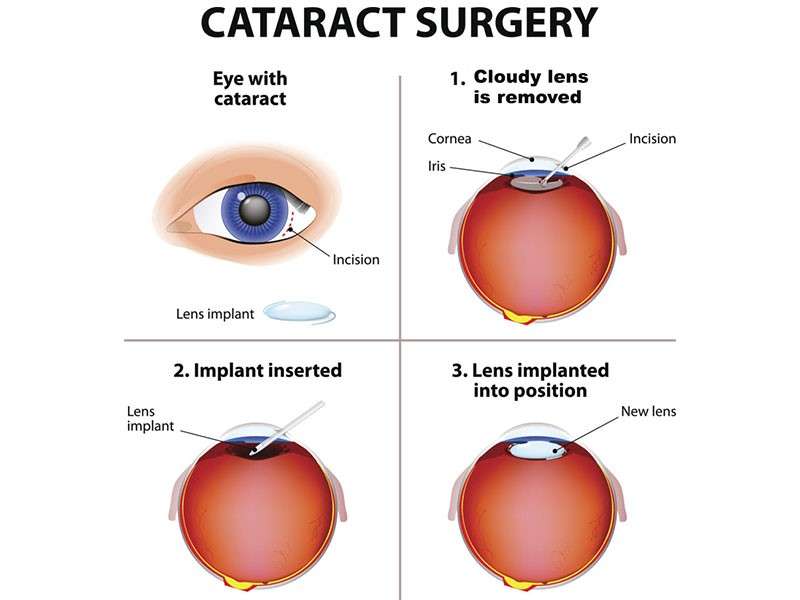
CATARACT SURGERY
Cataracts are a common eye condition that can cause vision impairment, characterized by the clouding of the eye's natural lens. While they typically develop slowly with age, various factors like genetics and prolonged exposure to UV rays may accelerate their formation.
- Symptoms include blurred or cloudy vision, difficulty seeing at night, and sensitivity to light.
- Diagnosis is usually made through a comprehensive eye examination that includes checking visual acuity and examining the lens with specialized equipment.
- Treatment involves surgical removal of the cloudy lens, often replaced with an artificial intraocular lens.
- Post-operative care may involve using eye drops to aid healing and regular follow-ups to ensure recovery.
- Most patients experience a significant improvement in their vision after surgery.
Understanding cataracts is essential for early intervention and maintaining healthy vision as one ages.